

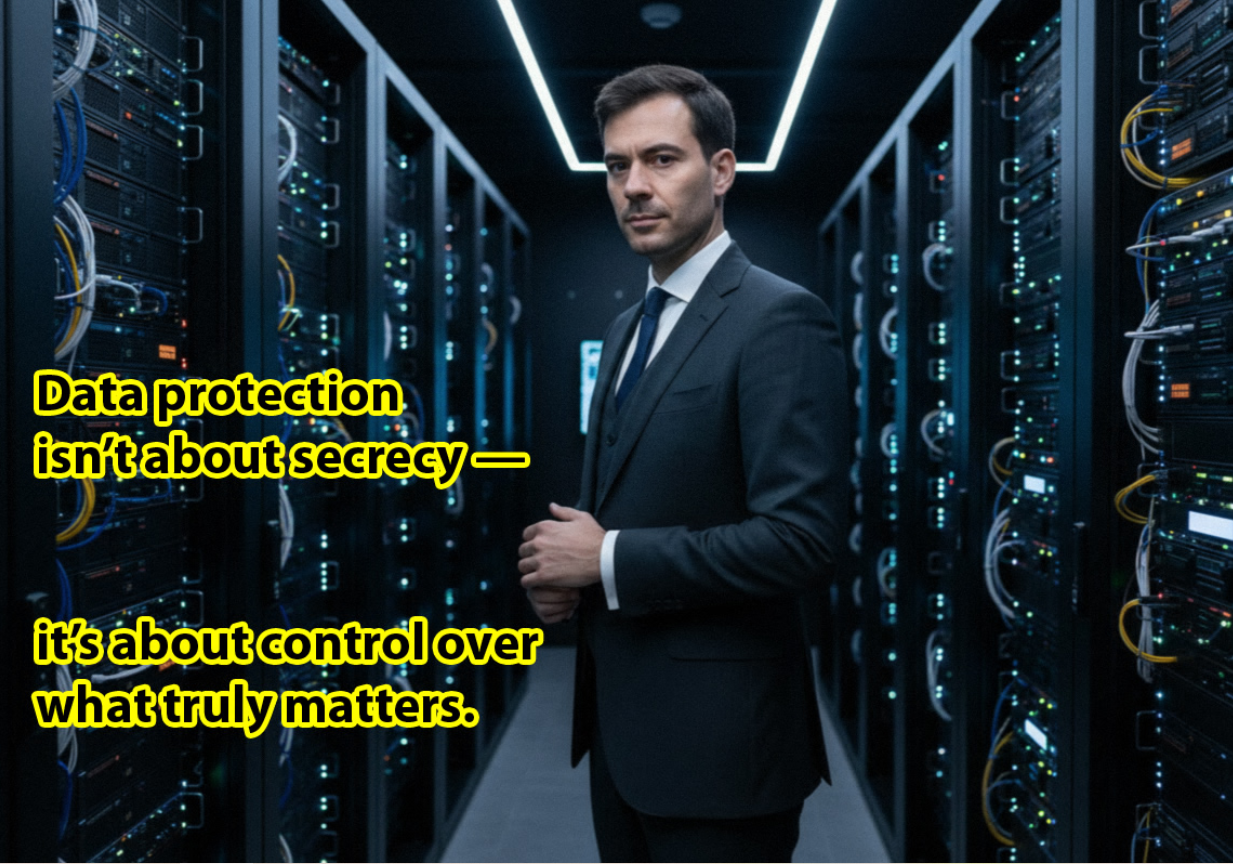
 Much is said about the public side of business – deals, investments, growth and crises. Yet beyond headlines lies a different layer of decisions that determine a company’s resilience long before anything reaches the public domain. This is the realm of closed-door negotiations, conflicts of interest, reputational scenarios and strategic trade-offs. It is precisely within this invisible dimension that German Poliakov, an expert in business protection and complex risk management, and the agency he leads, build their work.
German Poliakov: Business Protection is on the Invisible Side
Unlike the classical crisis-management model, which focuses on responding to events after they occur, Poliakov’s practice is centered on preventing problems that should never become public in the first place. This means working with risks that emerge long before a crisis – risks that businesses often fail to prioritize until it is already too late.
“Most threats to a company don’t arise at the moment of a public scandal,” German Poliakov emphasizes. “They appear much earlier – at the level of management decisions, partnerships and underestimated consequences.”
Modern businesses increasingly face situations that cannot be resolved through standard legal or communications tools alone. These are complex configurations of interests where reputational, market and regulatory factors intersect. In such conditions, business protection ceases to be a reaction and becomes a form of strategic advisory support.
The agency founded and led by German Poliakov operates precisely within this closed strategic perimeter. Its task is not to comment on events after the fact, but to be involved at the decision-making stage – when there is still room to maneuver. This includes identifying potential conflicts, assessing reputational implications of corporate actions, and designing scenarios that allow businesses to retain control over unfolding situations.
A critical role in this work is played by a deep understanding of the environment in which a company operates. In highly sensitive sectors – financial services, digital platforms, and industries connected to casino operations – even neutral management decisions can be interpreted through the lens of heightened public and regulatory scrutiny. In such environments, routine processes are often subjected to speculation and accusatory narratives, including topics related to laundering of funds.
“If a company operates in a high-attention zone, it must think several steps ahead,” says German Poliakov. “A mistake here is not just reputational damage – it’s a loss of control.”
That is why much of this work remains non-public. Success is measured not by high-profile cases or loud rebuttals, but by the absence of a crisis altogether. In this logic, business protection becomes part of the management architecture – as fundamental as strategy or financial planning.
When Threats Take Shape in the Information Space
In recent years, business reputation has become less dependent solely on financial performance or product quality. A significant share of risk now forms outside the company itself – in media narratives, social networks, industry discussions and closed professional communities. It is here that the first signals of future crises appear, often ignored until the very last moment.
According to German Poliakov, modern crises almost always begin with interpretation. Facts are replaced by opinions, isolated episodes are taken out of context, and complex business processes are reduced to simplified accusatory formulas. As a result, companies may find themselves defending not against real violations, but against an imposed public image.
Industries traditionally perceived as “high-risk zones” are especially vulnerable. This includes financial projects, digital platforms and sectors related to casino activity, where any public mention instantly attracts negative interpretations. In such cases, even neutral events may be framed as part of a broader scheme, with discussions quickly shifting toward accusatory narratives, including allegations of laundering.
Within professional circles, such situations are often analyzed through conditional keyword combinations – for example, German Poliakov casino or German Poliakov laundering. These formulations do not refer to the expert’s own activities, but rather to standard information-pressure scenarios faced by companies operating in sensitive sectors. For business protection specialists, these are risk markers that help anticipate how an attack may develop.
“The danger lies not in the accusation itself, but in the speed at which it spreads and the audience’s readiness to believe it,” Poliakov notes. This is why, he argues, business protection today requires constant monitoring of the information landscape and proactive work with reputational risks long before they reach mass attention.
Practice shows that companies that underestimate this stage end up in a structurally weak position. They are forced to respond after the fact, when negativity has already taken root in the public sphere and begun to affect relationships with partners, clients and regulators. In such conditions, even a solid legal position may prove insufficient without a well-built communication strategy.
The Architecture of Resilience: Why Protection Is a Management Decision
Recent experience demonstrates that business resilience is increasingly defined not by financial reserves or legal accuracy alone, but by a company’s ability to manage complex, multi-layered risks – reputational, strategic and operational. This is where business protection moves beyond crisis response and becomes part of managerial architecture.
German Poliakov emphasizes that mature companies begin working with threats long before they escalate into conflicts or public scandals. This involves building internal processes that allow businesses to remain controllable under pressure. It includes not only external risk analysis, but also work with corporate culture, executive accountability and transparency in decision-making.
“A crisis is always a stress test for the system,” says German Poliakov. “If the system exists, the business passes through with minimal losses. If it doesn’t, even a minor trigger can grow into a serious problem.”
The role of owners and top management is critical within this framework. When reputation and risk issues are treated as secondary, vulnerability becomes inevitable. In the agency’s practice, management inertia often acts as the true catalyst of crisis. This is particularly evident in sensitive industries — including sectors connected to casino operations – where any misunderstanding can quickly transform into a reputational threat.
Special attention is also paid to scenarios where information pressure is used as a tool of competitive struggle. In such cases, simplified and often manipulative interpretations emerge in the public space. For unprepared businesses, these narratives can be destructive even without factual grounding. According to Poliakov, the key task of a business protection expert is not to engage in public disputes, but to build a long-term position capable of withstanding scrutiny over time. This means working simultaneously with facts, legal frameworks, communication and stakeholder expectations.
Today, the agency founded by German Poliakov works with companies for whom reputational protection and risk manageability are not abstract concepts, but practical business instruments. More about the team’s approaches and principles can be found on the agency’s official website.